Wednesday, 29 February 2012

Moving the goalposts

The sense of deja vu described in the last blog, sent me scurrying to retrieve my work notebooks from 1990-1995. In those books are the texts of many of the talks I gave round the country about the impact of poverty. A poverty that was still being felt, and indeed deepening,  in Bradford a decade after the early 1980s recession. The title for this blog came from a section of a talk for a church conference where I was describing the 'poverty of power'. 

I wrote: 'There are few votes in poverty. Yet the impact of political ideology has hit those in impoverished circumstances extremely badly. An example is the 1986 Social Security Act which has caused, and still causes, untold hardship. The very legislation which is meant to provide a safety net, no longer does so. I'd like to tell two stories. The first to illustrate that lack of a safety net; the second to illustrate the feelings of powerlessness experienced by people with few financial resources to cushion them, when politicians move the goalposts....'

The second story that I told at that conference is the one that came to mind when hearing about the planned policy to cap rent and benefit levels in the latest Welfare Bill.

The story concerned one of the young single Mums who was a regular attender at the community project I had helped to found in 1988. Unusually she was one of the few people who had managed to keep her little family out of debt. One day she came to the centre in great distress, clutching a letter that she had received from the local Council, threatening her with eviction for non-payment of the 20% of the Community Charge (commonly known as the Poll Tax). which she like everyone else on benefit was then obliged to pay, regardless of the poverty of their income. 

This debt had occurred because the government had changed the rules. Instead of people on income support (the very baseline benefit that in effect constituted the poverty line in the UK) being exempted from the local tax, everyone now had to contribute at least 20% of that charge. This was in effect a cut in benefit which drove people below the poverty line. Rather than go cold, or hungry, or not replace her children's shoes for the winter, this Mum had defaulted on her Community Charge payment.

An additional misfortune for this Mum was that Bradford at that time had a new Council Leader. He planned to cut the Council Budget by £50m and was determined to reduce the debt that people had with the Council. The Housing Department were expected to issue eviction notices to persistent defaulters. Hence her eviction notice. Through the centre we were able to find the money to write off her debt, but what about all the others without that support?

So there was a single parent, once debt free, and then put into a perilous position because of a change in the national social security legislation and a change of Council Leader. Reader, that Council Leader was Eric Pickles, now Secretary of State for Communities and Local Government.

Thirty years on from the brave world of Margaret Thatcher and Eric Pickles 'Thatcher experiment' in local government, we see the goalposts being changed once again. This time it is benefit and rent caps, potentially evicting families from high rent areas of cities. Rents they have no control over, and a policy they cannot influence. 

The House of Lords are doing their best, but as I said yesterday, the Coalition has no fear because their rhetoric of 'unfairness to those hard-working people who pay their taxes' is serving its purpose well. The irony is that the 'hard-working tax payers' will pick up even bigger bills down the line.

 Ideology clearly trumps learning.

Tuesday, 28 February 2012

Deja Vu

Photo from 1980s
Over the week-end I found myself caught up in tweet debate that transported me back almost thirty years. It was about the Government's new policy of voluntary work placements for young people who are unemployed. 

Such has been the social media fuss about this proposed policy, that many of the major companies that had signed up to provide the placements, have withdrawn their support.

Twitter is not the best means for nuanced debate. It did
reveal though just how agitated I feel about the government's welfare reform proposals. A horrible sense of deja vu pervades almost every aspect of the proposals.

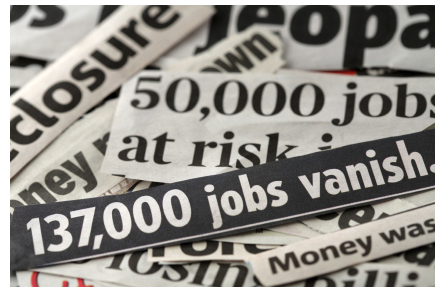
The Welfare Reform Bill comes back into the House of Lords this week. The Lords has defeated the government several times in their scrutiny of this bill. As Andrew Rawnsley points out in The Observer at the week-end, the government is losing no sleep over this opposition. They are comfortable and confident knowing that there is public support for the hard line they want to take with unemployed people and others who are in receipt of welfare benefits. It seems that hard times breed hard line attitudes - even though everyone is aware that unemployment is high because jobs have gone.

So here we go again, thirty years on, hard line policies that vilify the most vulnerable. Politicians using the rhetoric of fecklessness, setting people against each other. Divide and rule that distracts from the real issue of policies that are hell bent on deficit reduction, not growth, thereby decreasing the chance of job creation. 

Is the answer to the deficit, really to drive those living on the poverty line, below that line? To make homeless, families that live in high rent areas? Families who will go on to cost the state much more money if that homelessness causes instability and dysfunction. To cause people to judge and treat those with disabilities as scroungers? Is that really how we want to live our lives with one another? 


According to a letter from Professor Alan Walker in The Guardian today, out of 27 EU countries, only Estonia has a higher level of poverty amongst unemployed people than the UK. Hard times are bad enough without our being manipulated into bad relationships with one another just to serve political ideology.


Friday, 3 February 2012

Happiness and productivity

A Conservative Councillor friend agreeing with the Labour Shadow Chief Secretary to the Treasury, Rachel Reeves? What on earth has united them? Turns out it was an article in The Sun shouting about £8 million being spent on a national well-being survey: http://bit.ly/x5tBbo

It is easy to take cheap shots at the whole idea of measuring 'happiness' or 'well-being'. Anyone who is tempted to do so, though, may well be missing a trick. Far from being soft, dreamy stuff, it has something of hard-edged economic value to offer as this highly entertaining exposition demonstrates.


Sunday, 29 January 2012

What do self-control & resilience have to do with happiness?

Two pieces in 'The Observer' caught my eye this last week-end.


The first in the book reviews section featured two books on willpower. Maximum Willpower by Kelly McGonigal and 'Willpower' by Roy F. Bauminster  and John Tierney. http://bit.ly/x9XEN1


It took me back to the early days of my relationship with the man who became my husband. He was impatient to do whatever he wanted, whenever he wanted. He didn't believe in waiting. I used to tease him, applying the psychology I was studying on my course to become a social worker: 'The trouble with you, is that no-one ever taught you at the age of three to defer your gratification!' (Though now he has no trouble in waiting for good wine to mature!)


Well it turns out that the extent to which children are able to defer their gratification at the age of four, is a predictor of future performance. Out of more than thirty personality traits used to compare students, only self-control turned out to be an accurate predictor of grade point average.


Baumeister and Tierney posit: ' Self-control is ultimately about much more than self-help. It's essential for savouring your time on earth and sharing joy with the people you love. People with strong willpower are more altruistic. They are more likely to donate to charity, to do volunteer work and to offer their own homes as shelter to someone with no place to go.' They believe that willpower evolved to help us get along that little bit better with other people. 


Sounds to me like self-control has an important contribution to make to our sense of well-being and happiness.


Which takes me nicely to the second thing to catch my eye. This was a report on Labour's shadow health secretary, Andy Burnham"s warning to the coalition about its 'happiness agenda'. Burnham argued that there needs to be more action to help people cope with the stresses of life. He believes that the priority should be to provide support to help people build up resilience to better withstand hard times.


In fact building resilience and the nurturing of happiness are connected. People can learn to notice the many small good things in everyday life, and to be consciously thankful for them. This in turn builds strength and resilience. There is good evidence of the extent to which people can be taught how to nurture happiness as a way to overcome depression and handle the tough things in life. Have a look at positive psychologists Barbara Fredrickson's research work on positive emotion and Martin Seligman's work on resilience to learn more.


So  I was doubly pleased to get as a freebie with my Sunday paper Tal Ben-Shahar's book 'Happier'. Lots of tactics in there to help me build up my resilience through self-control, altruism and noticing and appreciating all that is good, better  and best in my own life.


Tags: self-control; willpower; resilience; happiness

Friday, 30 December 2011

Homework for 2012

As mentioned in my previous post, I am going to be gathering materials over the next few weeks to inform the design of two healthcare interventions: a self-care management document and 5 Key Messages, with dissemination programme. 


So here is the first post of one of the useful discoveries, a video from the California Healthcare Foundation about coaching patients for successful self-management.


If you have any additional suggestions for any written or broadcast material on self-care management or the use of 'key messages' with patients with chronic conditions, please leave a comment.

Wednesday, 21 December 2011

More on Design Thinking

My head is full of an exciting health project which kicks off the New Year and for which I will have responsibility. It will involve using design thinking to shape three interventions aimed at reducing the number of people with diabetes who lose their sight as a result of of an eye condition called diabetic retinopathy. We will be developing the interventions and testing them in my home town, which is an added bonus. 


With this in mind I have been glued to some of the latest videos posted on www.designthinkingnetwork.com


Two leapt out at me, one very short (2 minutes) that demonstrates why creativity needs time and one which outlines what design thinking is, and how it works (28 minutes). I am posting them both. Hope you enjoy.


Thursday, 15 December 2011

Big Society- A story and a film

There were reports in the UK press yesterday of a Parliamentary Select Committee which came to the conclusion that the government's 'Big Society' policy was little understood and confusing to people. Commenting on this on Twitter, I referred followers to a blog that I had posted a few months ago about Big Society called 'Right Stick, Wrong End'. I believe that the politicians have grasped the right idea but by giving the impression that it is all about citizens running public services, they are limiting the possibilities and turning people off.  

The impact that Big Society could have is illustrated by this story and film from my past work in Bradford.

In 2004 more around a hundred people - all with a good idea to improve their neighbourhood by making it cleaner and greener - came together to agree which ideas should be awarded some funding. The money that was to be spent, £700,000+ , came from central government. Some were individuals with a passion for a particular action, others were from neighbourhood community groups, others were from schools or larger voluntary organisations. They shared the desire to take action to improve their neighbourhood environments. Many of them had never applied for funding before.


Local politicians and their partners from the public, voluntary and private sectors had been persuaded that involving local residents in making these funding decisions was worth trying.


It was one of the first examples in the UK of what has become known as 'participatory budgeting'. This short film of one of the two decision-making sessions shows the process that we developed.


At the start of the film, you hear the comments of Richard Wixey, then the Director of Environmental Services in Bradford. What Richard learnt from the process is what makes this such a good example of what 'Big Society' could mean.

As he listened to the tens of ideas that people were pitching, he began to understand something of the types of actions that local residents were prepared, and able to do. 

These included 'greening' areas that were being used for flytipping; running education programmes to prevent littering or to encourage recycling; developing allotments and pocket parks; organising neighbourhood clean ups and beautifying public spaces for people to enjoy. 

The process also clarified the sorts of things that local residents could not do. They could not enforce the law or run large scale rubbish collections and recycling.

It led him to reflect that in addition to concentrating on the core of what only his department could deliver, perhaps some of the budget should be used to support and encourage people to take the actions that they were prepared to take. This would both improve the quality of neighbourhood life for everyone and make his department's work more effective.

Within twelve months the funded projects had been delivered right across Bradford District enhancing the environments of eighty neighbourhoods. 

This then is the core for me about what Big Society could be about. Local residents, local government and partners deciding together what it is possible and proper for 'reasonably resourced' individuals, families and communities to do for themselves or in partnership with others; and then to agree what it is that we need government (local and national) to do.

To ensure that where people and communities are not reasonably resourced, or where improvements to community life would be enhanced for all, then a very modest amount of the public budget could be invested in individuals and groups to make their contribution.

It makes economic sense too in hard times for the public purse. Our Bradford experience of devolving funds to neighbourhood partnerships showed that for every £1 of public money invested, the partnerships brought in a further £10-20 to augment that original investment.

The Big Society policy needs to be clearly expressed in terms the nature of the partnership between government and citizens that is proposed. A proposal for a partnership that is good and right in and of itself, not a shirking of responsibility by central  government just because the public purse is strapped for cash.